Explore effective strategies and resources for Alzheimers recovery. Discover expert advice, treatment options, and support systems to enhance cognitive health and quality of life.
The following abstract reports photobiomodulation research that reports dementia was reversed.
Photobiomodul Phtomed Laser Surg. 2019 Mar;37(3):133-141. Effects of Home Photobiomodulation Treatments on Cognitive and Behavioral Function, Cerebral Perfusion, and Resting-State Functional Connectivity in Patients with Dementia: A Pilot Trial. Linda L. Chao
Photobiomodulation Research Abstract
Objective: To examine the effects of transcranial and intranasal photobiomodulation (PBM) therapy, administered at home, in patients with dementia.
Background: This study sought to replicate and build upon a previously published case series report describing improved cognitive function in five patients with mild-to-moderate dementia after 12 weeks of transcranial and intranasal near-infrared (NIR) PBM therapy.
Materials and methods: Eight participants (mean age: 79.8 ± 5.8 years old) diagnosed with dementia by their physicians were randomized to 12 weeks of usual care (UC, n = 4) or home PBM treatments (n = 4). The NIR PBM treatments were administered by a study partner at home three times per week with the Vielight Neuro Gamma device. The participants were assessed with the Alzheimer’s Disease Assessment Scale-cognitive (ADAS-cog) subscale and the Neuropsychiatric Inventory (NPI) at baseline and 6 and 12 weeks, and with arterial spin-labeled perfusion magnetic resonance imaging (MRI) and resting-state functional MRI at baseline and 12 weeks.
Results: At baseline, the UC and PBM groups did not differ demographically or clinically. However, after 12 weeks, there were improvements in ADAS-cog (group × time interaction: F1,6 = 16.35, p = 0.007) and NPI (group × time interaction: F1,6 = 7.52, p = 0.03), increased cerebral perfusion (group × time interaction: F1,6 = 8.46, p < 0.03), and increased connectivity between the posterior cingulate cortex and lateral parietal nodes within the default-mode network in the PBM group.
Highly significant findings were reported using both assessment methods. Improvement in cognitive functioning for the subjects receiving photobiomodulation was truly impressive. Given the small sample size (only four treatment subjects and 4 control subjects) the fact significance was found is remarkable. It is highly unusual for a study with such a small sample size to report significance.
Conclusions: Because PBM was well tolerated and associated with no adverse side effects, these results support the potential of PBM therapy as a viable home treatment for individuals with dementia.
For more information about the Vielight device used in this study, contact Vielight.com (877-355-8012). The 10% discount code is healing4me.
Efforts to develop therapies that reverse the dementia of patients diagnosed with Alzheimer’s disease have produced few viable options. I believe one of the reasons for the inability to develop effective therapies is that inventors and researchers have focused on the wrong type of therapies, namely medicines and surgeries. Photobiomodulation therapy is a promising alternative.
The future of medicine rests with light and sound therapies of one form or another. This is why I am so excited to discover brand new, cutting edge therapies that use light to treat medical conditions like Alzheimer’s.
Photobiomodulation Therapy Research
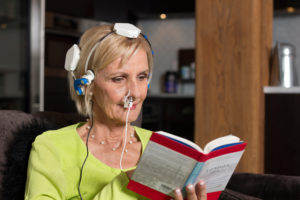
A July 2018 University of California San Francisco study presented evidence on how photobiomodulation therapy reverses dementia. Eight adults diagnosed with dementia participated in the study. Four received 12 weeks of self-administered photobiomodulation treatments in their homes. Four were assigned to a control group. Treatments were administered using the Vielight Neuro Gamma device. Outcome measures were assessed at baseline, 6-weeks, and 12-weeks.
Findings revealed significant improvement in cognition and functional connectivity. Dr. Chao concluded that photobiomodulation therapy is a safe, non-pharmacological therapy that can be used to treat Alzheimer’s patients in their homes.
In another 2017 study, the effects of photobiomodulation (PBM) that used red or near-infrared light was studied in five older adults with dementia.
After 12 weeks of treatment subjects showed significant improvements on the Cognitive Alzheimer’s Disease Assessment Scale. With only five subjects, the effect sizes had to be huge for significance to be shown.
Caregivers who kept daily journals tracking experiences of the research subjects reported participants had:
Better sleep
Fewer angry outbursts
Decreased anxiety
Did Positive Results for Subjects Continue After Treatment was Suspended?
No. Precipitous declines were observed during the follow-up 4 week no-treatment period. Results suggest treatments need to continue for results to be sustained.
Saltmarche et al.(2017) Photomed Laser Surg. 2017 Aug;35(8)
This video previews recent research at MIT that explains why light therapy offers a promising opportunity to reverse dementia associated with a diagnosis of Alzheimer’s disease.
Have you been unable to find effective therapies for dementia?
Are you desperate to find something that may help?
Watch this brief video that explains how the newly invented Neuro Gamma technology works
Consider taking a risk – and it will be a risk – and give photobiomodulation serious consideration. There are no reported side effects.
photobiomodulation therapy
Vielight Neuro Gamma
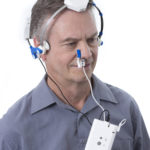
The Neuro Gamma transcranial-intranasal near infrared (NIR) headset is engineered for increased efficacy. This device features improved transcranial clusters and updated microchip LED boosting technology that triples the power density of previous devices. The device fits a wide variety of head shapes and sizes.
The Vielight engineering team has extracted an infusion of increased output using a pulsed near-infrared LED source which incorporates a microchip technology within the Neuro’s intra-nasal diode. The 40 Hz pulse rate correlates with EEG gamma brain wave entrainment to facilitate a much stronger effect on memory and cognition enhancement.
As covered in the audio clip with this post I recommend you investigate the Vielight Neuro Duo engineered by Vielight which is the world’s only transcranial-intranasal brain photobiomodulation (PBM) device and the result of years of engineering and research. Clinical research with our technology has produced improvements in cognition, memory and blood flow.
The Vielight Neuro Duo comes with both Alpha and Gamma modes.
Gamma (40Hz): focus, memory, brain energy.
Alpha (10 Hz): relaxation and sleep improvement.
Photobiomodulation Device Warranty
The Vielight company is confident in its new invention and wants as many people to use it as possible right now.
When you purchase the Vielight Neuro Gamma, you will have six months to see if helps reverse your dementia. If for any reason you are not satisfied with your progress, you can return the device to Vielight for an 80% refund.
I have never heard of a company that is so confident in their product. The warranty is the most generous I have ever encountered. As a result, the risk involved is reduced significantly. The company obviously have high confidence in their new photobiomodulation invention as do I.
Cost of Neuro Gamma Device
Vielight has generously offered a 10% discount for any purchases through their website. The retail cost of the Neuro Duo device is relatively expensive – about $1800 – you can claim a 10% discount with the discount code healing4me.
Use the device for six months to explore if it offers symptomatic relief. Most people are happy with the results (9 out of 10 users) but not everyone as is the case with any therapeutic option.
If it does not offer a celebration of symptom relief you anticipated, return the device within the 6 month period after purchase for an 80% refund of the purchase price.
Everyone in the family can use the therapy.
The Vielight organization obviously has confidence in their product which is a very encouraging sign. I have never heard of any company that offered a 6 month warranty.
Second, find the listing of the Gamma Neuro device.Be sure to enter the coupon code healing4me on the coupon field of the shopping cart to claim your 10% discount which will automatically be applied. Please also email me your experience with using it after a month (or longer) of use.
Or, call the company to order over the phone. They are most happy to answer any and all questions: 1-855-875-6841 (North America) | 1-647-201-5499 (International) – [ 8.30 am – 4.30 pm EST ]|. Given them the coupon code to claim the 10% discount.
Photobiomodulation Mechanism
photobiomodulation mechanism
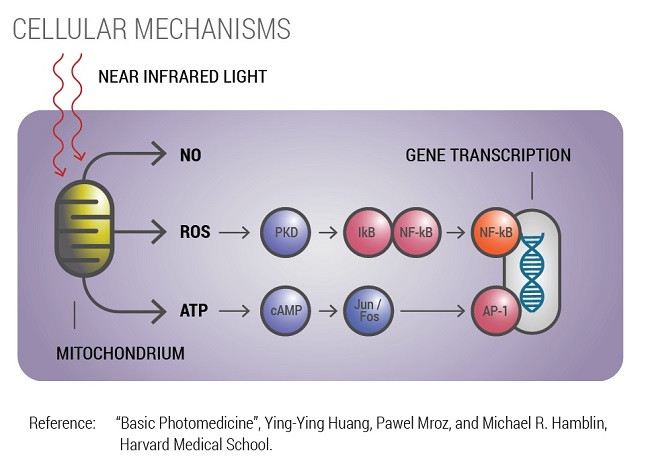
Visible red and near infrared light energy stimulates cells to generate more energy facilitating self-repair. The healing takes place within the mitochondria through an enzyme called cytochrome c oxidase. This enzyme accepts and converts the light (or photonic) energy into cellular energy (ATP) and other gene transcription factors leading to cellular repair and regeneration.
Will Photobiomodulation Therapy Interfere with My Daily Life?
No. You are welcome to receive the therapy while working, reading or doing anything really. Dr. Lim, the inventor, recommends that people with more serious health issues such as Alzheimers might be advised to do the therapy at night while going to sleep. The treatment duration lasts only 20 minutes.
Photobiomodulation Therapy while Working
Interview with the Inventor, Dr. Lew Lim
Dr. Lew Lim is an engineer and a Doctor of Natural Medicine with additional diplomas in Medical Neuroscience and Business. He obtained his degrees and diplomas from the University of California at Berkeley, University of Sheffield, Duke University, Quantum University and The Chartered Institute of Management Accountants, UK.
Photobiomodulation Reverses Dementia Summary
This post presents an explanation for how photobiomodulation reverses dementia and is a promising therapy for Alzheimers.
Robert Rodgers PhD Zero Point Healers
robert@zeropointhealers.com
Olympia Washington
877-526-4646
The abstract of a study below reports that photobiomodulation light therapy increases the speed of information processing and enhances brain function. Researchers are now celebrating more and more confirmatory evidence that photobiomodulation offers the opportunity to reverse dementia and is a viable therapy for persons diagnosed with Alzheimer’s.
The gold standard photobiomodulation devices have been developed by Vielight: https://www.vielight.com
Claim a 10% discount on all devices with the coupon code healing4me
Photobiomodulation Light Therapy Study
Biomed Opt Express. 2020 Sep 22;11(10):5783-5799. Transcranial photobiomodulation-induced changes in human brain functional connectivity. Elizabeth L Urquhart, Hashini Wanniarachchi, Xinlong Wang, Francisco Gonzalez-Lima, George Alexandrakis, Hanli Liu
Abstract
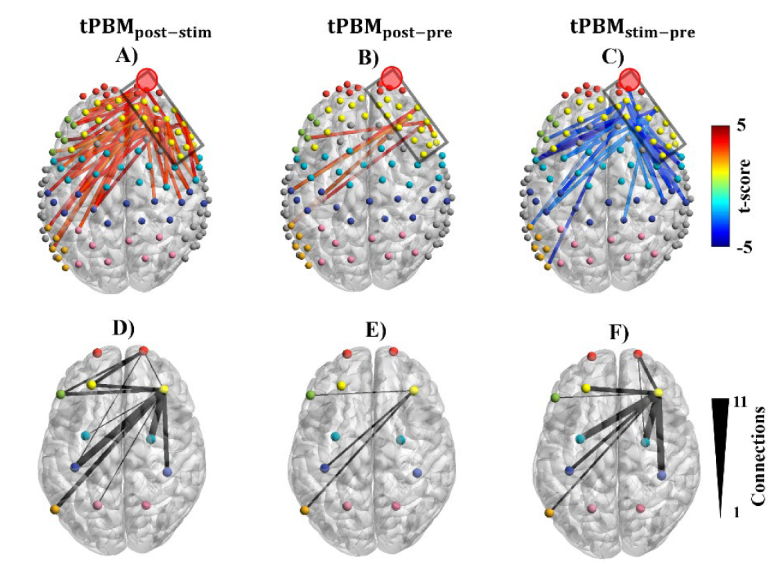
Transcranial photobiomodulation (tPBM) with near-infrared light on the human head has been shown to enhance human cognition. In this study, tPBM-induced effects on resting state brain networks were investigated using 111-channel functional near-infrared spectroscopy over the whole head. Measurements were collected with and without 8-minute tPBM in 19 adults.
Functional connectivity (FC) and brain network metrics were quantified using Pearson’s correlation coefficients and graph theory analysis (GTA), respectively, for the periods of pre-, during, and post-tPBM. Our results revealed that tPBM (1) enhanced information processing speed and efficiency of the brain network, and (2) increased FC significantly in the frontal-parietal network, shedding light on a better understanding of tPBM effects on brain networks.
PS: The Vielight.com 10% coupon code for all of their photomiomodulation devices is healing4me
Research on Smart Electrical Meters and Alzheimers
Curr Alzheimer Res
Curr Alzheimer Res. 2022;19(2):119-132. Low Intensity Electromagnetic Fields Act via Voltage-Gated Calcium Channel (VGCC) Activation to Cause Very Early Onset Alzheimer’s Disease: 18 Distinct Types of Evidence. Martin L Pall
Abstract
Electronically generated electromagnetic fields (EMFs), including those used in wireless communication such as cell phones, Wi-Fi and smart meters, are coherent, producing very high electric and magnetic forces, which act on the voltage sensor of voltage-gated calcium channels to produce increases in intracellular calcium [Ca2+]i. The calcium hypothesis of Alzheimer’s disease (AD) has shown that each of the important AD-specific and nonspecific causal elements is produced by excessive [Ca2+]i. [Ca2+]i acts in AD via excessive calcium signaling and the peroxynitrite/oxidative stress/inflammation pathway, which are each elevated by EMFs.An apparent vicious cycle in AD involves amyloid-beta protein (Aβ) and [Ca2+]i. Three types of epidemiology suggest EMF causation of AD, including early onset AD. Extensive animal model studies show that low intensity EMFs cause neurodegeneration, including AD, with AD animals having elevated levels of Aβ, amyloid precursor protein and BACE1. Rats exposed to pulsed EMFs every day are reported to develop universal or near universal very early onset neurodegeneration, including AD; these findings are superficially similar to humans with digital dementia. EMFs producing modest increases in [Ca2+]i can also produce protective, therapeutic effects. The therapeutic pathway and peroxynitrite pathway inhibit each other.
A summary of 18 different findings is provided, which collectively provide powerful evidence for EMF causation of AD. The author is concerned that smarter, more highly pulsed “smart” wireless communication may cause widespread very, very early onset AD in human populations.
Current application and future directions of photobiomodulation in central nervous disease
Neural Regen Res (Neural Regeneration Research) 2021 Jun;16(6):1177-1185.
Abstract
Photobiomodulation using light in the red or near-infrared region is an innovative treatment strategy for a wide range of neurological and psychological conditions. It can promote neurogenesis and elicit anti-apoptotic, anti-inflammatory and antioxidative responses. Its therapeutic effects have been demonstrated in studies on neurological diseases, peripheral nerve injuries, pain relief and wound healing. We conducted a comprehensive literature review of the application of photobiomodulation in patients with central nervous system diseases in February 2019.
The NCBI PubMed database, EMBASE database, Cochrane Library and ScienceDirect database were searched. We reviewed 95 papers and analyzed. Photobiomodulation has wide applicability in the treatment of stroke, traumatic brain injury, Parkinson’s disease, Alzheimer’s disease, major depressive disorder, and other diseases. Our analysis provides preliminary evidence that PBM is an effective therapeutic tool for the treatment of central nervous system diseases. However, additional studies with adequate sample size are needed to optimize treatment parameters.


 Caregivers who kept daily journals tracking experiences of the research subjects reported participants had: